Start With a Gentle Dust-Off Before Any Washing
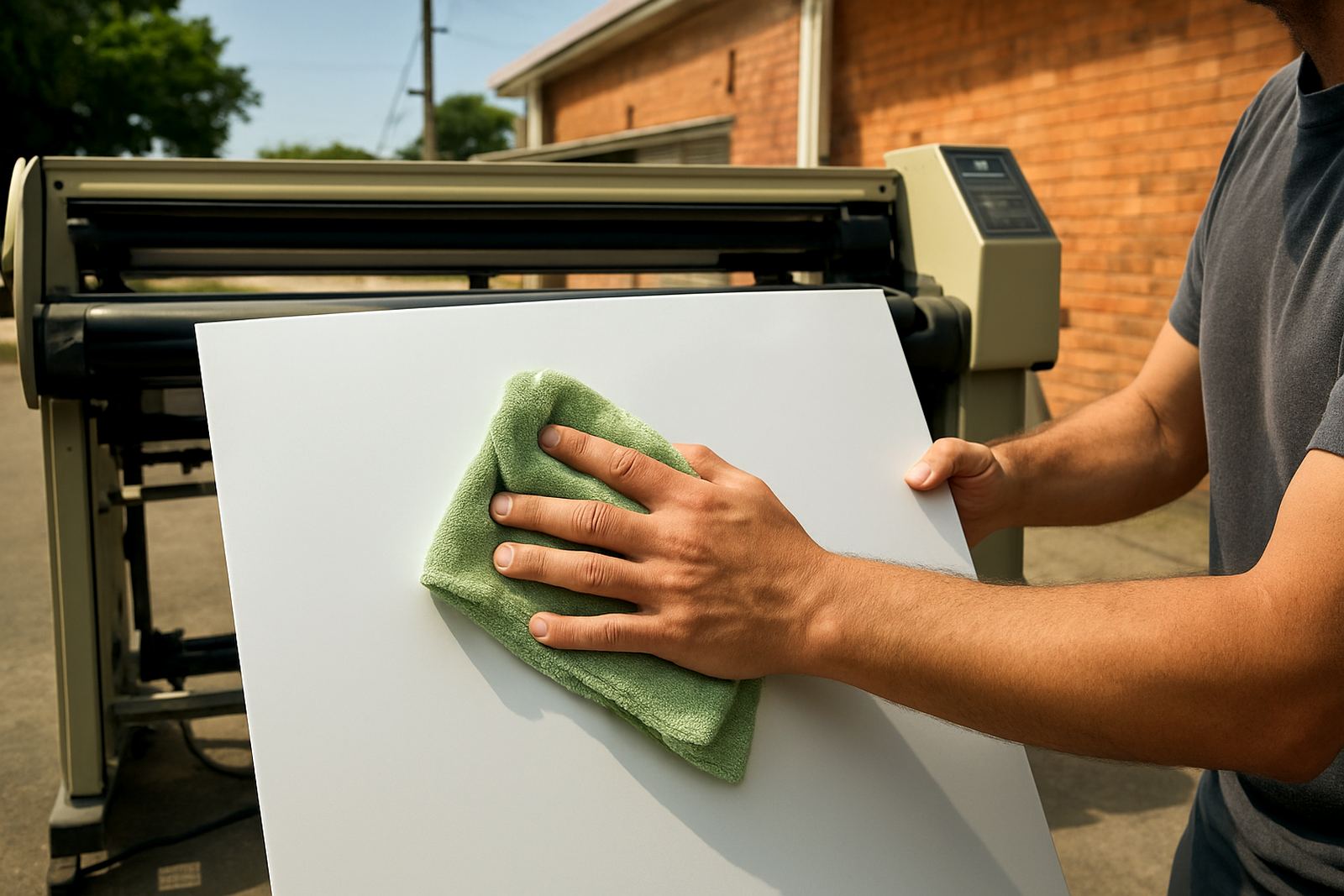
Before you wipe a sign, remove loose dust, sand and grit with a soft microfibre cloth or a clean feather duster. This matters in coastal areas like Durban North, Umhlanga and Ballito where fine salt can sit on the surface and scratch the finish if you rub it straight away.
If the panel is mounted high or above a shopfront, check that you can reach it safely. Do not lean ladders against light boxes, framed signs or window film edges. If the sign is difficult to access, arrange a maintenance visit rather than forcing a quick clean.
- Use a dry cloth first to lift loose dirt.
- Work from top to bottom so grime does not run down across clean areas.
- Avoid stiff brushes, scouring pads and rough cloths.
How to Clean Vinyl Lettering and Printed Graphics
Vinyl lettering and printed graphics should be cleaned with lukewarm water and a mild, non-abrasive soap. Wipe lightly in one direction, then rinse with a separate damp cloth so soap residue does not build up around the edges. A soft cloth is enough for most surfaces, even where there has been regular dust from traffic or construction.
Do not use thinners, strong solvents, degreasers or bleach on printed graphics. These products can dull the print, soften adhesive or leave patchy marks on laminated work. If the sign has been laminated, the surface is more protected but still needs gentle care.
- Mix only a small amount of mild soap with water.
- Use a clean sponge or microfibre cloth, not a rough pad.
- Dry the panel with a soft cloth to avoid water spots.
Looking After Light Boxes and Illuminated Faces
Light boxes collect dust inside and outside, especially after windy weather or load-shedding related power cycling when people notice the sign only once the lights come back on. Clean the outer face first, then check the frame for dirt around seals and joints. Keep water away from fittings, transformers and wiring points.
If the face is flickering, discoloured or showing moisture inside, stop cleaning and have it checked. A sign that is taking on water may need resealing or a replacement face. In humid coastal air, this is worth dealing with quickly before corrosion starts.
- Switch off power before any cleaning near illuminated signs.
- Use a damp cloth, not running water or pressure washing.
- Inspect for cracks, loose seals and trapped moisture.
Window Films Need Extra Care at the Edges
Window frosting and contra-vision films should be left to cure properly before any cleaning. If a new film has just been installed, allow the full curing period recommended by the installer before wiping the glass. Once cured, use a soft cloth, water and a mild cleaner that is safe for film.
Pay attention to the edges. Hard scrubbing or sharp tools can lift the film at corners, and once an edge starts lifting it can spread. In shopfronts with automatic doors or high traffic, be careful not to trap cloth fibres under the film line.
- Do not use razor blades, blades with holders, or metal scrapers on film.
- Avoid ammonia based glass cleaners unless the film type allows it.
- Wipe gently around seals, handles and corners.
Taking Care of Perspex, ABS and Chromadek Panels
Perspex and ABS signs can scratch more easily than metal panels, so keep cleaning cloths clean and soft. Chromadek panels are tougher, but they still need regular washing to remove dirt, bird droppings and salt. If droppings are left too long they can stain the coating and make the panel look older than it is.
For best results, wash these signs before dirt hardens. A mild soap solution is usually enough, and on larger shopfront panels you can work in sections. Do not let water sit in corners or around screw heads, because standing moisture can lead to rust on fixings or staining around the mounts.
- Rinse off loose grit before wiping.
- Dry around joints, corners and fixing points.
- Check for chips, cracks or loose brackets while cleaning.
When to Call for Repairs, Refurbishment or Removal
If a sign is faded, peeling, loose, or taking on water, simple cleaning will not solve the problem. Signs exposed to strong sun, coastal humidity and regular cleaning chemicals may need refurbishment sooner than expected. It is better to deal with a failing sign early than let it become unsafe or hard to read.
Call for help if you notice peeling vinyl, cloudy print, broken light box faces, damaged window film, or fixings that have worked loose. For shopfronts, offices and vehicle signage, maintenance visits can often extend the life of the installation and keep your site looking orderly.
- Arrange repairs if edges are lifting or panels are cracked.
- Book removal before replacing a sign, not after it has failed.
- Keep a record of any damage after storms, transport knocks or vandalism.