What Wall Graphics Are And How They Work
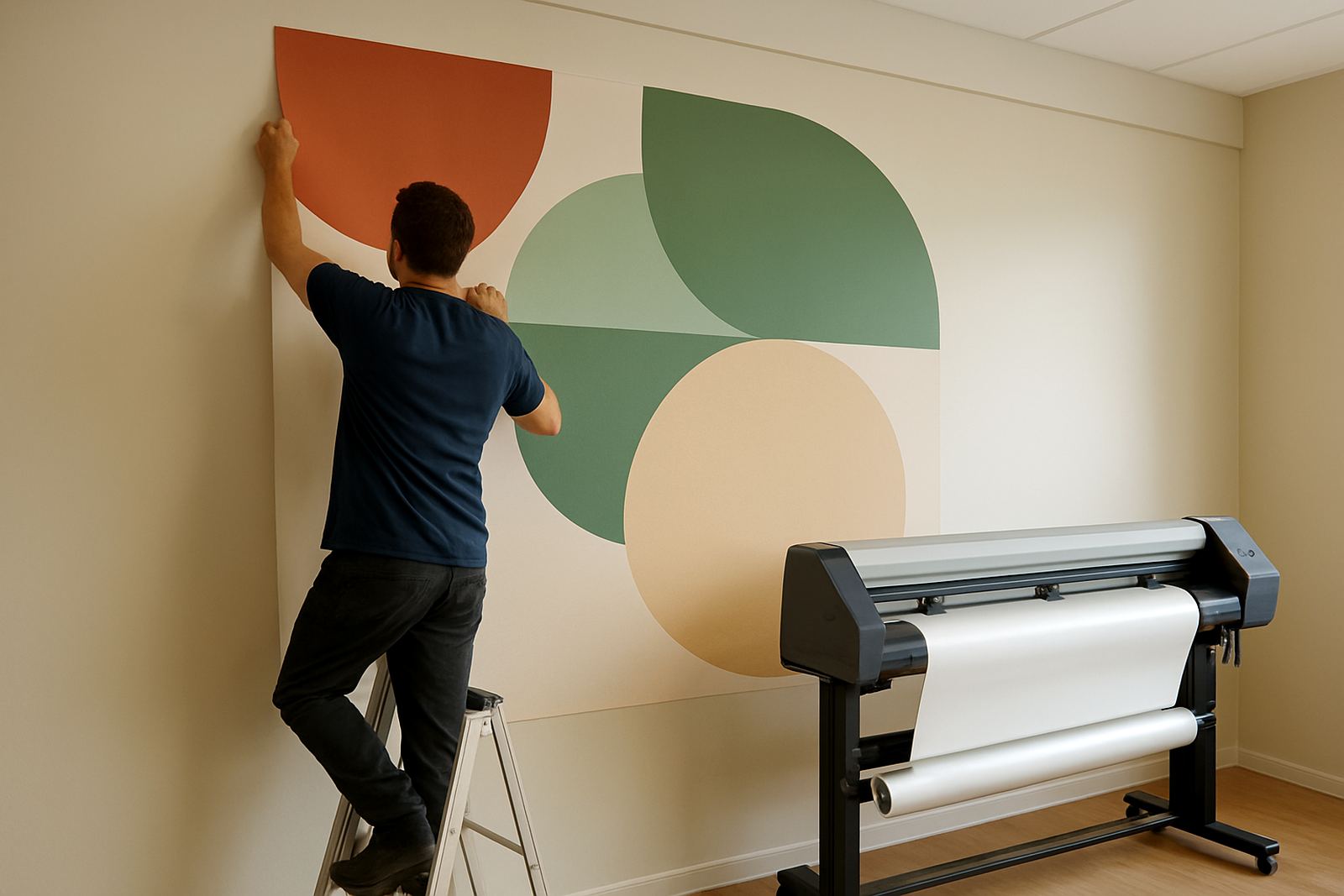
Wall graphics are vinyl prints or cut vinyl lettering applied directly onto prepared interior walls, partitions or smooth boards. They are used for branding, motivational text, wayfinding, classroom graphics, feature walls and product messaging. For many clients they are a better fit than painting, because the finish is consistent and the artwork can be changed later without major disruption.
We produce wall graphics from printed self-adhesive vinyl, cut vinyl and laminated finishes depending on the look and the surface. Printed graphics are useful for full colour images, gradients and branding. Cut vinyl is better for sharp text, logos and single colour designs. On painted walls, the paint must be fully cured and the surface should be clean, dry and sound before fitting, otherwise the vinyl can lift or wrinkle.
Sizes, Finishes And Common Format Options
Wall graphics are made to size, so there is no fixed standard panel. We often produce small decals from 150 mm wide up to full wall features of 3 m or more, depending on the wall length and access around the site. For larger walls, artwork is normally split into panels so installation is neater and easier to align. That also helps when a section must be replaced later after damage or a layout change.
Finish choices include matt for low glare, satin for a slight sheen, and clear or frosted-style effects where the design needs to sit over a coloured wall or existing branding. For wash areas and busy corridors, a laminated finish is often worth adding because it gives extra scuff resistance. We can also print contour cut shapes, repeated lettering or full mural panels for impact without making the wall feel cluttered.
- Custom widths and heights measured to the wall opening
- Single colour cut vinyl for text, arrows and logos
- Full colour printed murals with protective lamination
- Panelled installation for large walls and long runs
Where Wall Graphics Suit Best
These graphics suit spaces that need a visual lift without adding bulk to the room. Offices use them for reception branding, mission statements and meeting room names. Gyms often choose large motivational wording, class zones and motivational walls that hold up better than painted lettering. Schools use them for learning spaces, library areas and house colours, while retail stores use them to guide customers and highlight promotions.
In Durban and the coastal belt, interior walls can be affected by humidity, salty air near open entrances and regular cleaning. That means surface prep matters. If the wall is dusty, newly painted or still off-gassing, the adhesive will not bond properly. On shopfronts and mall interiors we also check for sunlight exposure, because direct heat through glass can shorten the life of cheaper films. It is a simple thing, but it saves rework later.
- Offices and reception areas
- Gyms, studios and wellness rooms
- Schools, colleges and training centres
- Retail stores, salons and showrooms
Installation, Access And Power Requirements
Wall graphics do not need electricity or gas for operation, which makes them practical for load-shedding periods and busy sites where temporary power is limited. Installation is done by measuring, marking level lines, cleaning the surface and fitting the panels with care. On larger projects we may use ladders or mobile access equipment, especially where the wall height reaches above 2.4 m or where the feature spans a stairwell or atrium. If the wall is in an occupied office or school, we can schedule work after hours, over a weekend or in stages to reduce disruption.
For best results the wall should be dry, dust free and not recently painted. Fresh paint usually needs time to cure fully, and textured walls can affect adhesion. If there are cracks, damp patches or loose plaster, those should be sorted before the graphics go up. We also check for surface obstructions such as trunking, fittings, alarms and skirting lines so the finished layout lands cleanly.
Care, Cleaning And Servicing Over Time
Most wall graphics are easy to maintain if they were installed on the right surface. Dust can be wiped away with a soft cloth or a lightly damp microfibre cloth. Avoid harsh solvents, abrasive pads and aggressive scrubbing, especially on printed and laminated graphics. In high traffic areas such as schools and gyms, corners and edges should be checked from time to time for lifting or scuffing. If one section gets damaged, a panel can often be replaced without redoing the full wall.
We also offer maintenance visits, sign refurbishment and sign removals where a wall must be updated for new branding, a new tenant or a remodel. That is useful for landlords and chain stores who need a consistent look across several sites. If the wall is being handed back at the end of a lease, removal can be done carefully to reduce residue and keep the paintwork in better condition.
What To Check Before You Order
To quote and produce wall graphics correctly, we need the finished wall size, the surface type, and the artwork or wording in the right format. If you do not have artwork ready, we can assist with artwork setup and layout advice. It helps to know whether the wall is painted plaster, drywall, glass or a sealed panel, because each surface behaves differently. If the wall includes sockets, light switches, pipes or signage already on it, those details must be noted so the design fits properly.
Please also confirm where the installation is taking place, whether the site is indoors or near direct sun, and whether there are any access limits such as mall rules, school hours or building security procedures. On projects across eThekwini, Umhlanga, Pinetown and the North Coast, that information helps us plan materials and labour properly. A short site survey is often the quickest way to get it right first time, and it avoids the sort of on site surprises that waste time.
Key facts
| Material | Printed self-adhesive vinyl, cut vinyl or laminated wall film |
|---|---|
| Typical size range | From small decals to full wall murals over 3 m wide |
| Finish options | Matt, satin, gloss and clear effect options |
| Indoor use | Yes, best for offices, gyms, schools and retail interiors |
| Power or gas needed | None for the product itself |
| Durability | Depends on surface prep, exposure and finish selected |