Reception Signs That Set The Tone From The Front Door
Reception signs are the fitted branding pieces that sit behind a counter, on a feature wall, above an entrance or in a waiting area. They help people find the right place straight away and give your business a more organised, professional feel. In busy Durban buildings where clients come through on foot traffic, security access points or shared foyers, a well-made reception sign is often the first thing they notice.
We make reception signs in a range of materials and finishes, depending on the look you want and how much light is in the space. Some clients want a clean corporate panel in acrylic or Perspex, while others prefer layered lettering, illuminated light box work or a more durable indoor signboard with raised elements. For spaces that need something sharp but practical, we can produce signs that suit both a modern office and a high traffic reception area. The finish matters because indoor signs sit close to people, so edges, print quality and mounting need to be neat, not just visible.
- Suitable for offices, clinics, studios, estate agents, schools and business foyers
- Can be flat, layered, backlit or stand-off mounted
- Designed for indoor viewing distances from 1 m to 15 m
- Available in matte, gloss or frosted finishes
Common Materials, Sizes And Mounting Options
Reception signs are usually made to size, although there are common formats that work well in most spaces. Smaller name panels may start at 600 mm wide, while full feature walls can run to 3 metres or more, depending on the wall and the message. The best size depends on how far away people will stand, the height of the wall and whether the sign needs to sit behind furniture or above a counter. We often size signs to fit neatly within a tiled wall bay or plastered section so the whole area looks balanced.
For the sign face, we use materials such as Perspex, ABS, aluminium composite board, foamed PVC, vinyl graphics and printed laminate panels. Raised lettering can be cut from acrylic or ABS for a crisp, clean finish. If the sign is going near glass, we can also use window frosting or contra-vision to carry branding through to the entrance area without blocking too much light. In coastal Durban, the indoor environment is usually kinder to signs than outside, but sea air can still creep in near open doors so proper edge sealing matters.
- Typical thicknesses: 3 mm, 5 mm and 8 mm for acrylic or acrylic faced panels
- Stand-off lettering depth: usually 10 mm to 30 mm from the wall
- Mounting choices: concealed fixings, stand-offs, adhesive bonding or screw-through brackets
- Finish options: solid colour, printed artwork, brushed look, clear cut-outs or frosted areas
Where Reception Signs Work Best In Durban Buildings
A reception sign should do more than look attractive. It should work with the room layout, the lighting and the way visitors move through the space. In a Durban North office block, for example, the sign might need to sit behind a narrow counter with glass to one side and a corridor on the other. In Umhlanga or Ballito, many businesses want a more polished finish for client-facing rooms where the sign becomes part of the brand image as soon as someone steps in.
These signs suit law firms, medical rooms, finance offices, estate agencies, guest houses, gyms, salons and trade showrooms. They are also useful for multi-tenant premises where each business needs a clear identity at the front. For larger sites in Pinetown or Westville, we often combine a reception sign with directional signs, door vinyls and room identifiers so visitors are not left guessing where to go. That makes the whole front-of-house flow much easier.
If you are running a business with load-shedding affecting your lighting, we can design reception signage that still reads well in daylight and under backup power. In spaces with good natural light, non-illuminated signs often do the job best. Where a darker foyer or evening trade is involved, a light box or internally lit face can help keep the sign visible after hours, especially for client arrivals and security controlled entrances.
Installation, Power Needs And What The Wall Must Allow
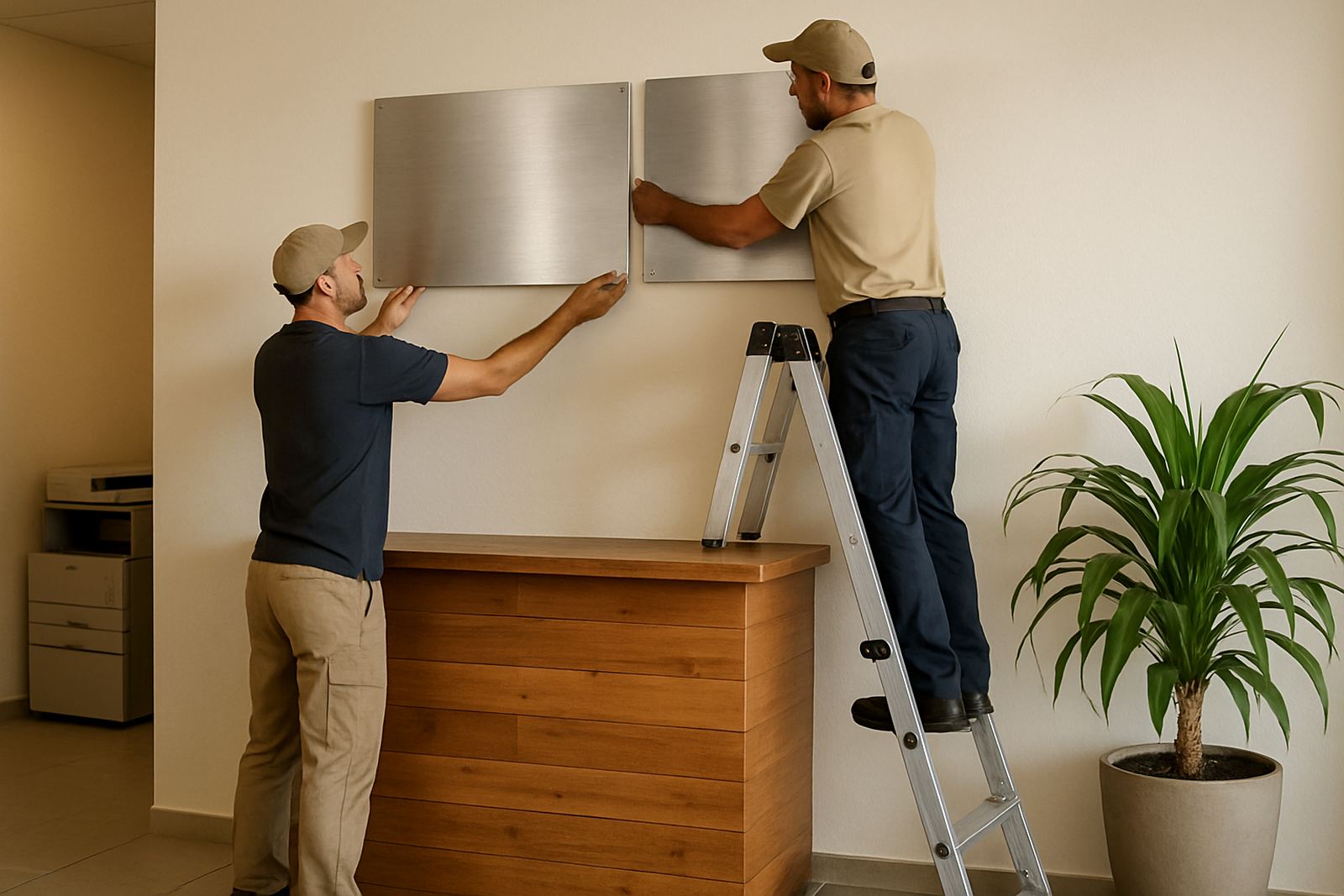
Most reception signs are installed on plaster, painted drywall, timber backing boards or existing feature walls. We do site surveys where needed so we can check the wall finish, measure accurately and confirm the fixing method before production starts. That helps avoid problems with hidden pipes, weak plaster or uneven surfaces. If the wall has a lot of texture, we may suggest a backing panel first so the final sign sits flat and reads properly.
Power is only needed if the sign is illuminated. Non-lit reception signs need no electrical supply at all, which makes them quick to fit and simpler to maintain. Light boxes and lit acrylic signs need a suitable power point nearby and, in some cases, a transformer or driver hidden behind the panel. We plan the install so cables are not visible from the front and so the sign can be serviced later without unnecessary wall damage. For buildings that run on generators or inverters during outages, we can keep the power draw modest and practical.
- No power required for flat, applied or raised non-illuminated signs
- Illuminated signs need a nearby power source and access for maintenance
- Wall strength and surface flatness should be checked before production
- Install timing depends on size, access, and whether the building is occupied
Artwork, Colour Matching And Practical Finish Choices
Good reception signage starts with proper artwork setup. Logos need the right proportions, correct colours and enough contrast to stay readable from the doorway. We can work from supplied artwork or help prepare files for print and cutting. If your branding uses corporate colours, we try to match them as closely as the chosen material and print method allow. On a wall sign, a slightly matte finish can cut glare from overhead lights, while a gloss finish can work well in darker rooms where the sign needs a bit more presence.
Many clients also ask for layered effects. That could mean a printed background with cut lettering on top, frosted panels with vinyl text, or a simple logo mark with raised elements. If the reception area is used by the public throughout the day, it is worth choosing finishes that are easy to wipe clean and do not mark easily. In humid parts of the coast, a sign that looks good in the shopfront may still need proper sealing at the edges so it stays neat over time, not just on installation day.
- Check spelling, spacing and logo proportions before approval
- Confirm the final wall width and viewing height, not just the artwork size
- Choose a finish that suits your lighting, glare level and cleaning routine
- Ask for a sample or material option if the sign must match existing branding
Care, Servicing And Refurbishment Over Time
Reception signs do not need heavy maintenance, but they do benefit from regular care. Dust, finger marks and cleaning products can dull the finish if they are left too long, especially on glossy acrylic or dark surfaces. A soft cloth, mild soap and water is usually enough for routine cleaning. Avoid abrasive pads and harsh chemicals because they can scratch printed faces and lift vinyl edges.
If your space changes, the sign can often be updated instead of replaced. We carry out sign refurbishment, removals and maintenance visits for businesses that change names, move offices or refresh their interior branding. That might mean replacing just the face panel, updating lettering or adjusting the mounting points. For companies across eThekwini, Umhlanga, Pinetown and the KZN North Coast, this is often the practical way to keep the reception area current without starting over from scratch.
BP Signs works from Briardene, Durban North and installs reception signs across Durban North, Umhlanga, Pinetown, Ballito, Tongaat, Verulam, Westville and Phoenix. Whether the project is a small front counter panel or a full feature wall, we size it for the space and fit it properly, so it looks right from day one.
Key facts
| Materials | Perspex, ABS, aluminium composite board, foamed PVC, vinyl and printed laminate |
|---|---|
| Typical sizes | From 600 mm wide up to 3 m plus, made to measure |
| Thickness options | 3 mm, 5 mm and 8 mm common for face panels and acrylic elements |
| Mounting | Stand-offs, concealed fixings, adhesive bonding or screw-through brackets |
| Lighting | Non-illuminated or illuminated options with power supply where required |
| Finish options | Matte, gloss, frosted, printed, layered or raised lettering |