Clear safety communication for busy sites
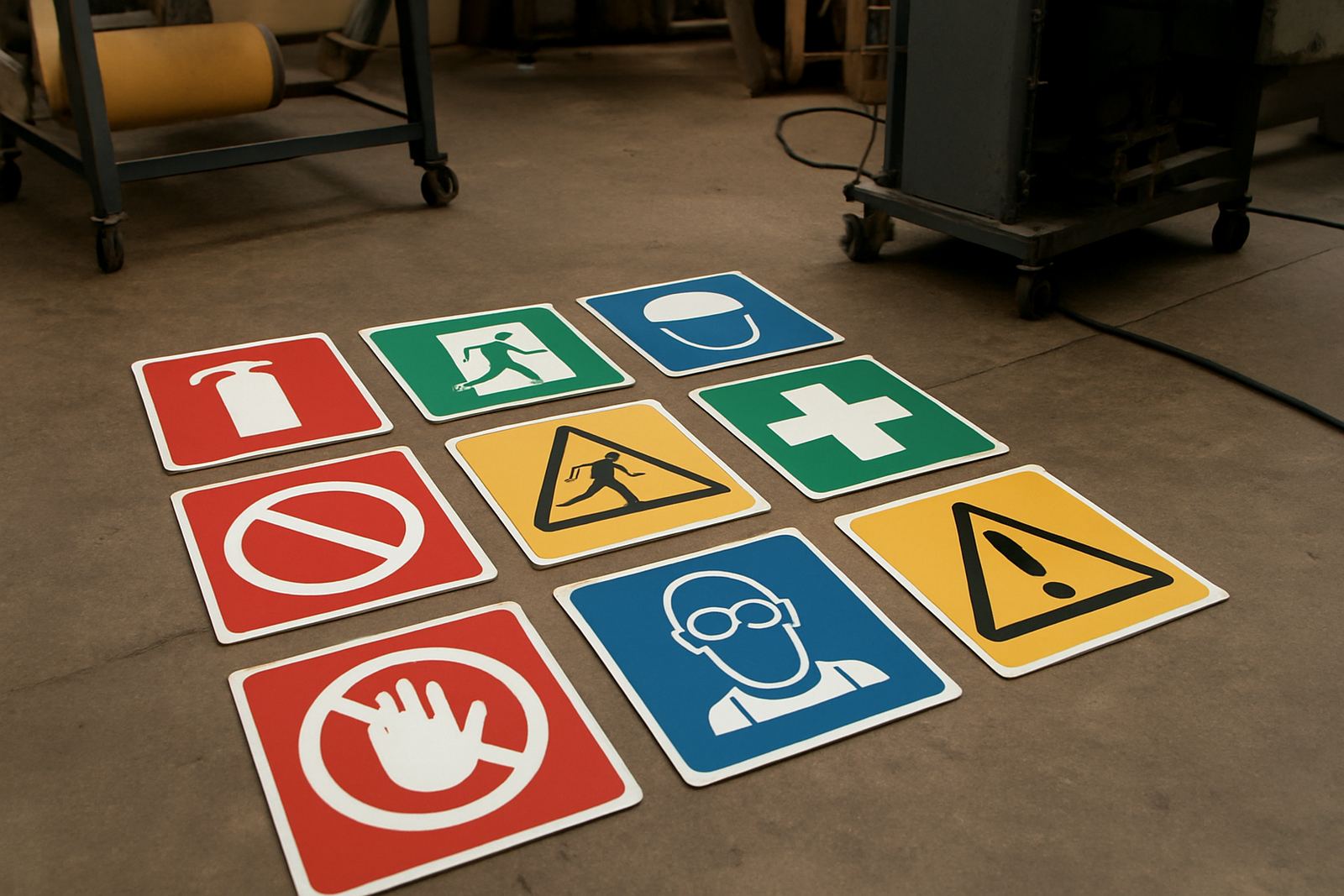
Safety signs are there to give quick instructions where people are moving, lifting, welding, entering restricted areas or working near hazards. On many sites, one missed instruction can cause delays or injuries, so the wording, colour and placement of each sign matter. We make signs for mandatory actions, warning notices, prohibition messages and general site information, all sized to suit the viewing distance and the space available.
For Durban businesses, humidity, salt air and strong sun can wear down low grade signage quickly. That is why material choice matters as much as the message. We supply indoor and outdoor signs in durable boards, self adhesive vinyl, Perspex and metal based options, with finishes that help the text stay readable even in bright light or near oily, dusty working areas.
Materials, sizes and finish options
The right material depends on whether the sign will be fixed indoors, on a gate, on a wall, on a machine or in full weather exposure. For long term outdoor use, we commonly recommend rigid boards such as Chromadek or Perspex, while internal message boards and temporary notices can be done in printed vinyl on a suitable substrate. Where a lighter sign is needed, ABS is a practical choice for many indoor applications.
Standard sizes are often enough for most workplaces, but we can also make custom dimensions to fit a doorway, pillar, fence panel or equipment housing. Common options include 300 x 200 mm, 450 x 300 mm, 600 x 400 mm and larger boards for yards and road-facing sites. If the sign needs to be seen from a distance, we can increase the text height and use reflective or high contrast finishes where needed.
We also offer lamination on printed safety notices to help resist scuffing, damp cloth cleaning and everyday wear. For sites with frequent washdowns or high dust, that extra layer can make the sign last longer and stay legible.
Where safety signs work best
Safety signs are used in nearly every workplace that has people, vehicles, chemicals, tools, power, heat or restricted access. In factories and warehouses they help mark forklift routes, loading bays, emergency exits and PPE zones. In workshops they support machine guarding, welding areas and eye protection reminders. On construction sites they are useful for site access, hard hat areas, no smoking points and hazard warnings around excavations or overhead work.
In retail, office and body corporate settings, safety signs also play a role in parking control, fire exits, stairways, restricted plant rooms and public access points. For coastal sites and industrial premises around Durban North, Umhlanga, Pinetown and the KZN North Coast, we often recommend signs that can handle moisture, sunlight and regular cleaning without fading too fast.
If your site has contractors, delivery teams or visitors who are not familiar with the layout, a clear sign plan can reduce confusion. That is especially important where there are separate entrances, pedestrian walkways and vehicle movement in the same yard.
Installation, fixing and power needs
Most safety signs do not need power or gas, because they are fixed message signs. They are mounted with screws, stand-offs, adhesive pads or bracket systems depending on the surface. For rough walls, steel cladding, glass, mesh fencing or painted panels, we will advise on the most suitable fixing method so the sign stays secure and flat. Where a sign must be fitted at height or in a busy access area, we plan the installation around site hours and safety controls.
If a safety sign forms part of a light box or illuminated notice, then power supply will be needed and we will confirm the route, mounting point and any switching requirement before installation. For simple static signs there is no gas requirement. On some sites we also coordinate after-hours work to avoid interrupting operations, especially where forklifts, loading and production cannot stop during the day.
Before fixing, it helps to confirm the surface condition, exact mounting height and whether the sign must comply with any internal site standard or municipal requirement. If your site has a gate procedure or contractor induction, we can match the sign wording to that system.
Care, servicing and sign life
Safety signs need only basic care, but they should be checked often enough to stay useful. Dust, oil mist, chemical splash, sun fade and scratches can all reduce legibility. A clean cloth and mild cleaner is usually enough for most boards, while harsh solvents should be avoided unless the sign material can take them. In wet or coastal sites, regular inspections help catch rusted fixings, peeling corners or cracked panels before the sign becomes difficult to read.
We can also assist with sign refurbishment, removals and maintenance visits where a site has changed layout or the current signs are no longer correct. If a sign refers to old routes, obsolete machinery or a changed hazard, it should be replaced rather than left in place. That small update can prevent confusion for new staff and contractors.
For businesses running shifts or working through load shedding, it is worth checking that critical signs are still easy to see when the site lighting changes. Reflective finishes or better positioning can help in those conditions.
What to confirm before you order
Before ordering safety signs, confirm the exact wording, symbol, size, colour code and where each sign will be fitted. If the message must meet a specific site rule or safety plan, it is better to supply that wording up front so we can match it accurately. It also helps to know whether the sign must be weather resistant, washable, reflective or suitable for indoor chemical exposure.
If you need multiple signs for one site, we can prepare a consistent set so your warning, mandatory and information boards look the same and are easy to read. That is useful for large premises where people move between gates, workshops, stock areas and offices all day.
Clients reach us through the enquiry form on our contact page. From our Briardene base in Durban North, we supply and install safety signs across eThekwini, Umhlanga, Pinetown and the KZN North Coast, with support from our local team led by Bongani Patrick Zulu.
Key facts
| Product type | Mandatory, warning and general workplace safety signs |
|---|---|
| Common materials | Chromadek, Perspex, ABS and printed vinyl on rigid board |
| Typical sizes | 300 x 200 mm, 450 x 300 mm, 600 x 400 mm and custom sizes |
| Finish options | Matt, gloss, laminated, reflective and high contrast |
| Installation | Screw fix, adhesive mount, stand-off or bracket mounting |
| Use areas | Factories, warehouses, workshops, construction sites, offices and yards |