Clinic signage that helps patients find the right room fast
In a clinic, every sign has a job. Patients need to find reception, consulting rooms, toilets, exit points and billing areas without having to ask twice. Good clinic signage also supports privacy, hygiene and a more orderly flow through the building. In Briardene and across eThekwini we see a lot of medical spaces that need clear direction, quiet colour use and signs that hold up to daily cleaning.
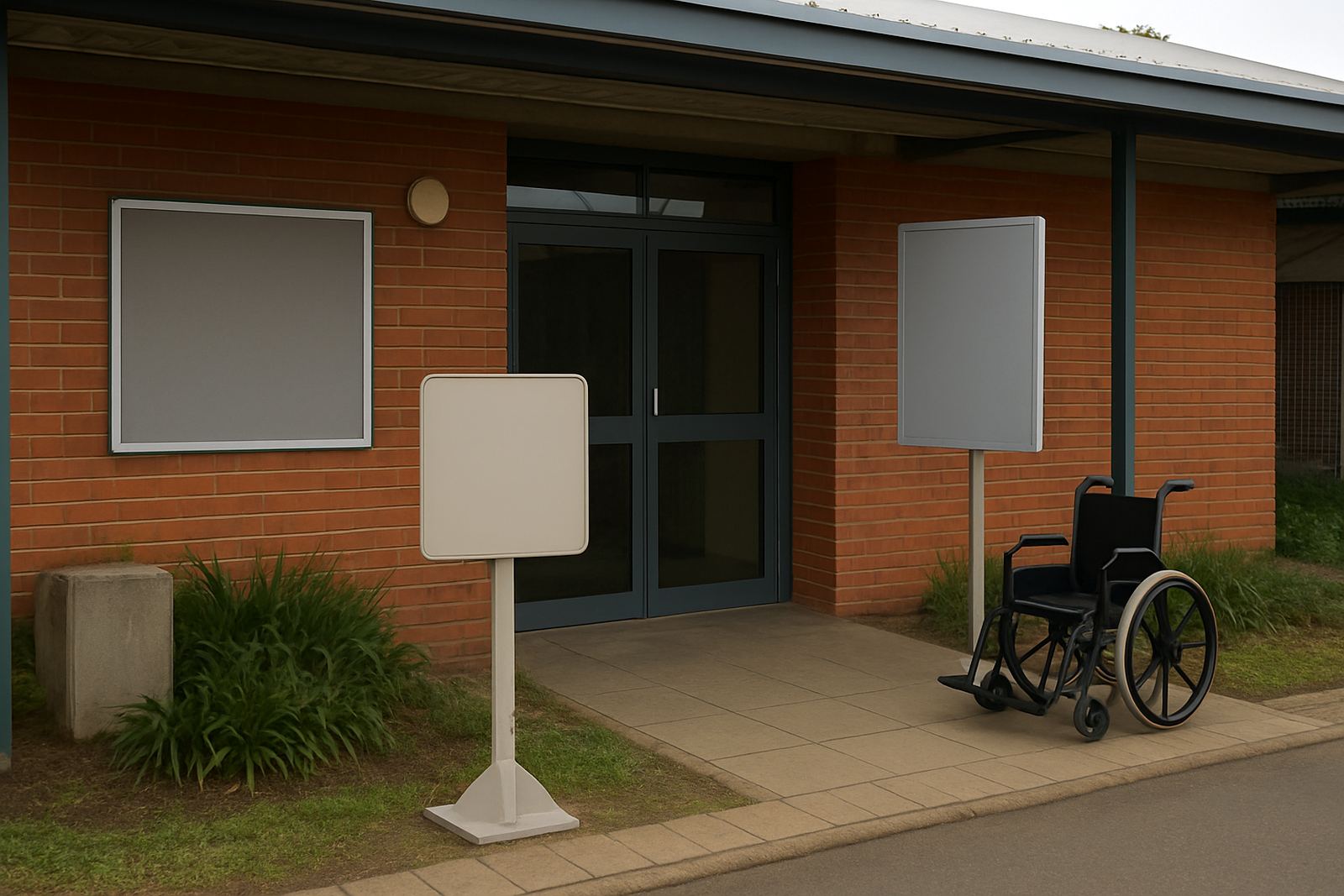
The best results usually come from a simple mix of door signs, reception signs, directional arrows, window frosting and a main identity sign at the entrance. If you are running a small GP rooms setup or a larger medical centre with several practitioners, the signage should match the building layout and the way patients move through it. That means thinking about visibility from a wheelchair, lighting after load-shedding and how the signs will look on cream, white or glass finishes.
Typical clinic sign set for a medical practice
A standard clinic package is often more practical than a single big sign. Most sites use a mix of flat panels and applied graphics, with a few stronger items at the front. For example, we often supply:
- Reception or welcome sign
- Door labels for consulting rooms, treatment rooms and staff areas
- Directional arrows for passages and waiting areas
- Window frosting for privacy on glass fronts
- Contra-vision for outward branding while still keeping some privacy inside
- Light box signage for entrances that must stay visible in the late afternoon or evening
- Health and safety notices for access, opening times and restricted areas
Depending on the site, we may use vinyl cutting for text and symbols, digital printing for larger graphics, or Perspex and ABS boards for a cleaner dimensional finish. For outdoor exposure, Chromadek works well where you need a tougher face on the wall or boundary. If the clinic faces strong coastal sun and salt air, material choice matters because cheap boards can warp or fade faster than expected.
Layout and planning advice before you print anything
Before we produce signs, we normally work from a site survey and basic floor plan. That helps us position signs at the right height and avoid putting important information behind a plant, a gate or a tinted glass panel. In a clinic, the priority is not decoration, it is legibility and patient comfort. Fonts should be simple, wording should be short, and the sign sequence should match how people naturally walk through the space.
At reception, the first sign should answer the main questions: where to wait, where to register and where to go next. In passages, keep room numbering consistent and avoid mixing door names with room numbers unless there is a clear system. For glass doors and partitions, frosting can reduce visual clutter and help with privacy, which is especially useful for counselling rooms, nurses stations and consultation spaces. If the building has a tricky entrance or limited parking, a well placed outside sign can save a lot of confusion.
- Use high contrast wording, such as dark lettering on a light background
- Keep room names short and standard across the property
- Allow for cleaning, repainting and future room changes
- Plan for daylight and after-hours visibility
Common mistakes that make clinic signage harder to use
One common mistake is trying to fit too much text into one sign. In a medical setting, people do not have time to read paragraphs on the wall. Another issue is using thin lettering that looks neat on screen but disappears from a distance. We also see signs placed too high, which makes them hard to read for older patients or anyone moving through a busy waiting area. A sign can be nicely made and still be wrong for the site if it sits in the wrong place.
Another problem is using finishes that look good for a week but do not stand up to regular wiping with medical cleaning products. Lamination helps protect printed surfaces, and properly fixed panels last longer in air-conditioned rooms and on sun facing walls. If you are in a coastal area such as Umhlanga, Ballito or Tongaat, salt and humidity can affect fixings and edges over time. That is why we look at the full installation, not just the artwork.
Loose branding across different rooms is another issue. A clinic should feel consistent from the gate to the consultation room, even if several practitioners share the space. When signs are made in different styles by different suppliers, the result can feel messy and patients may hesitate. It’s a small detail but it changes the whole flow of the place.
Budget ranges for clinic signage in Rand
Clinic signage can stay sensible if you plan it in stages. A small practice with basic room labels, one reception sign and a little frosting may start from about R2 500 to R8 000, depending on size, material and installation. A medium clinic with several rooms, directional signs, window graphics and a branded entrance panel often falls between R8 000 and R25 000. Larger facilities, or sites that need light boxes, multiple outdoor signs and more detailed branding, can sit from R25 000 upwards.
Prices move with the size of the boards, the amount of print, the type of fixing and whether old signage must be removed first. If the site needs new artwork setup, site surveys, removals or maintenance visits, those items are usually priced into the job. We can also phase the work so the most urgent signs go up first and the rest follow later. That helps when a clinic is opening quickly or working within a municipal permit process.
- Entry level: room labels, reception sign and basic frosting
- Mid range: wayfinding, window graphics and entrance branding
- Higher end: light box, full frontage and multiple internal signs
Where BP Signs fits into clinic projects across Durban
BP Signs works from Briardene, Durban North and installs across eThekwini, Umhlanga, Pinetown and the KZN North Coast. The team handles site surveys, artwork setup, large format printing, vinyl cutting, print lamination, sign fabrication, window installation, vehicle installation, shopfront installation, sign refurbishment, sign removals and maintenance visits. That means a clinic can keep one supplier from the first measurement through to the final fix on site.
We regularly work with practices that need quiet, professional signage rather than flashy shopfront treatment. For clinics, the right finish is usually neat, durable and easy to clean, with clear fonts and sensible fixing points. Bongani Patrick Zulu leads the business with support from Nokuthula Mkhize, Sashen Naidoo, Anele Dlamini, Priya Govender and Lindokuhle Khumalo, so projects are managed by people who understand both the production side and the on site realities. If your clinic needs a refresh, a full signage set or a few missing pieces, we can help plan it properly.