What frosted vinyl does on glass
Window frosting is a self adhesive vinyl film that is applied to plain glass to reduce direct visibility while still letting natural light through. It can cover the full pane, be cut into bands or shapes, or be used for logos and wording on entrance glass, boardroom windows and internal partitions. For offices in Durban where afternoon sun can be harsh, it also softens glare a bit without making the room feel dark.
We use frosted film for privacy, safety marking and styling, especially where you want a cleaner finish than curtains or blinds. It is a practical choice for reception areas, consulting rooms, retail fronts and canteens. The finish is subtle, but when the cut is tidy and the edges are properly trimmed it still looks professional and deliberate.
- Full frosted coverage for privacy
- Cut lettering and logos for branding
- Band frosting at eye level for compliance and privacy
- Decorative patterns for interior glass
Sizes, film types and finish options
Window frosting is supplied in rolls and cut to size for each pane, so there is no fixed panel size. We measure on site and allow for frames, mullions, handles and any uneven edges. For large shopfronts or office blocks in Umhlanga and Durban North, the film is often joined in sections and set out to keep the pattern straight.
Common options include full frost, etched-look film, cut vinyl graphics over frost and negative space designs where the glass shows through in selected areas. Widths vary by film type, with large format rolls used for shopfronts and narrow strips used for door panels or interior screens. The adhesive backing is suitable for smooth glass only, not rough or textured surfaces.
- Standard glass doors and windows
- Full height office partitions
- Top lights and side panels
- Reception screens and meeting room walls
Where frosting suits best in Durban buildings
This product suits buildings where you need privacy but still want daylight. It is widely used in offices, clinics, salons, training rooms, schools and customer service counters. On retail fronts, frosting can stop passers-by from seeing too much of the inside while still giving the shop a neat frontage. On upper floors, it helps with afternoon heat and reduces the feeling of being on display.
In coastal areas like Ballito, Tongaat and Verulam, we take care to prepare the glass properly because humidity can affect adhesion if the surface is not clean and dry. For businesses in Pinetown or Phoenix where there is more dust or vehicle traffic, the glass needs a proper wipe down before application so the film does not lift at the corners later on.
- Meeting rooms and boardrooms
- Medical and wellness practices
- Storefronts and reception areas
- Factory offices and internal walkways
How installation is done on site
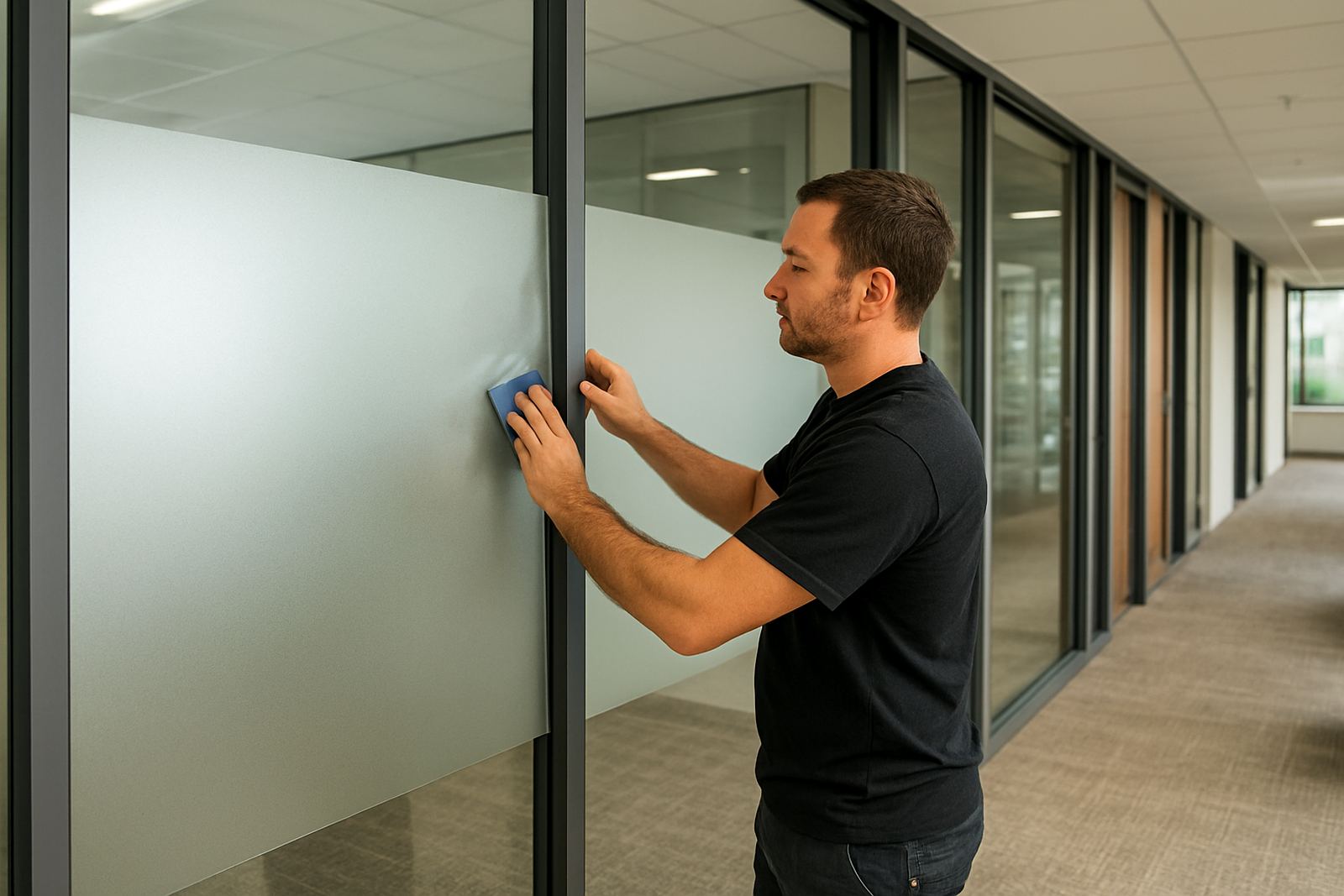
Installation starts with a site survey and glass measurement. The panes are checked for cracks, sealant residue and any paint overspray, because a poor glass surface shows through the film. After cleaning, the film is aligned, wet applied where needed and squeegeed down to remove air and water. Edges are trimmed carefully so the finish sits flush against the frame. It is usually a one visit job for smaller premises, although larger premises or multistory sites may need access planning.
No power or gas is needed for the film itself, but installation may need access equipment for high level windows, especially on shopfronts or upper offices. If the area is busy, we work around trading hours so customers are not blocked from entry. For glass close to public walkways, we can also add warning text or visual bands where needed for safety.
- Site survey and measuring
- Glass cleaning and surface prep
- Cutting and fitting on site
- Final trim and edge check
Care, cleaning and long term upkeep
Once fitted, frosted vinyl is low maintenance. Clean it with mild soap and water on a soft cloth, then dry with a clean microfibre cloth. Do not use strong solvents, rough scouring pads or high pressure cleaning on the edges. If a pane gets damaged or the branding changes, the film can usually be removed and replaced without having to change the glass.
In humid coastal weather the main thing is to keep the surface clean and avoid water sitting at the edges for long periods. If the glass has been tinted, laminated or fitted close to a frame that sweats, the installer should account for that before the film goes on. Small bubbles in the first day or two can settle, but lifting edges or cloudy sections should be checked.
- Use gentle cleaning products only
- Avoid scrubbing the film edges
- Do not use blades or hard scraping tools
- Book maintenance if sections peel or scratch
What to check before you place the order
Before ordering, decide how much privacy you need and whether the frosting is for full coverage or branding only. Measure the glass accurately and note whether the panes are fixed, sliding or hinged. If there are logos, wording or pattern repeats, send the correct artwork in a clean format so the cut lines are accurate. It also helps to know if the glass is standard clear glass or already treated in some way, because that affects adhesion.
For compliance and daily use, think about door handles, sight lines and whether people need to see through at seated height or standing height. If you need one way visibility, plain frosting is not enough and contra vision may be a better option for that section. For most office and retail jobs, though, frosted vinyl is the neatest and most cost effective answer. We can advise on the right lay out, but a clear brief saves time and avoids rework.
- Measure each pane separately
- Confirm privacy level and height
- Check for logos, text or decorative cut outs
- Say whether the glass is inside or outside facing
Key facts
| Material | Self adhesive frosted vinyl film for smooth glass |
|---|---|
| Finish | Etched-look frost, full coverage or cut graphic sections |
| Typical thickness | About 80 to 100 microns depending on film type |
| Application | Interior or exterior face of glass, as specified on site |
| Light transmission | Allows daylight through while reducing direct visibility |
| Best use | Offices, shopfronts, meeting rooms, clinics and partitions |