Start with where the banner will stand
Before you order, work out exactly where the stand will be used. A banner for a reception counter in Umhlanga needs different wording and height than one used at an expo in Durban ICC or a product launch in Pinetown. Check the floor space, ceiling height and how close people will stand to it. If it will sit near a doorway or aircon vent, a lighter base may move, so placement matters.
For coastal areas like Ballito, Tongaat and uMhlanga, think about humidity and salt in the air. A banner that lives in a reception area may need better print protection and careful storage after use. If it will be moved between venues, ask how it packs into a carry bag and whether one person can carry it comfortably.
- Measure the available floor space, including foot traffic around it
- Check if the banner will be indoors only or used at covered outdoor points
- Confirm whether it must be freestanding for long periods or only during the event
- Note if the stand will be moved often between branches or events
Choose the right size for the message
Most pull-up banners work best when the message is short and direct. If people are walking past at speed, they should be able to understand the point in a few seconds. For receptions, a cleaner layout with one headline, a logo, a contact line and maybe a service list usually works well. For events, you may need a stronger headline and larger type so it can be read from a few metres away.
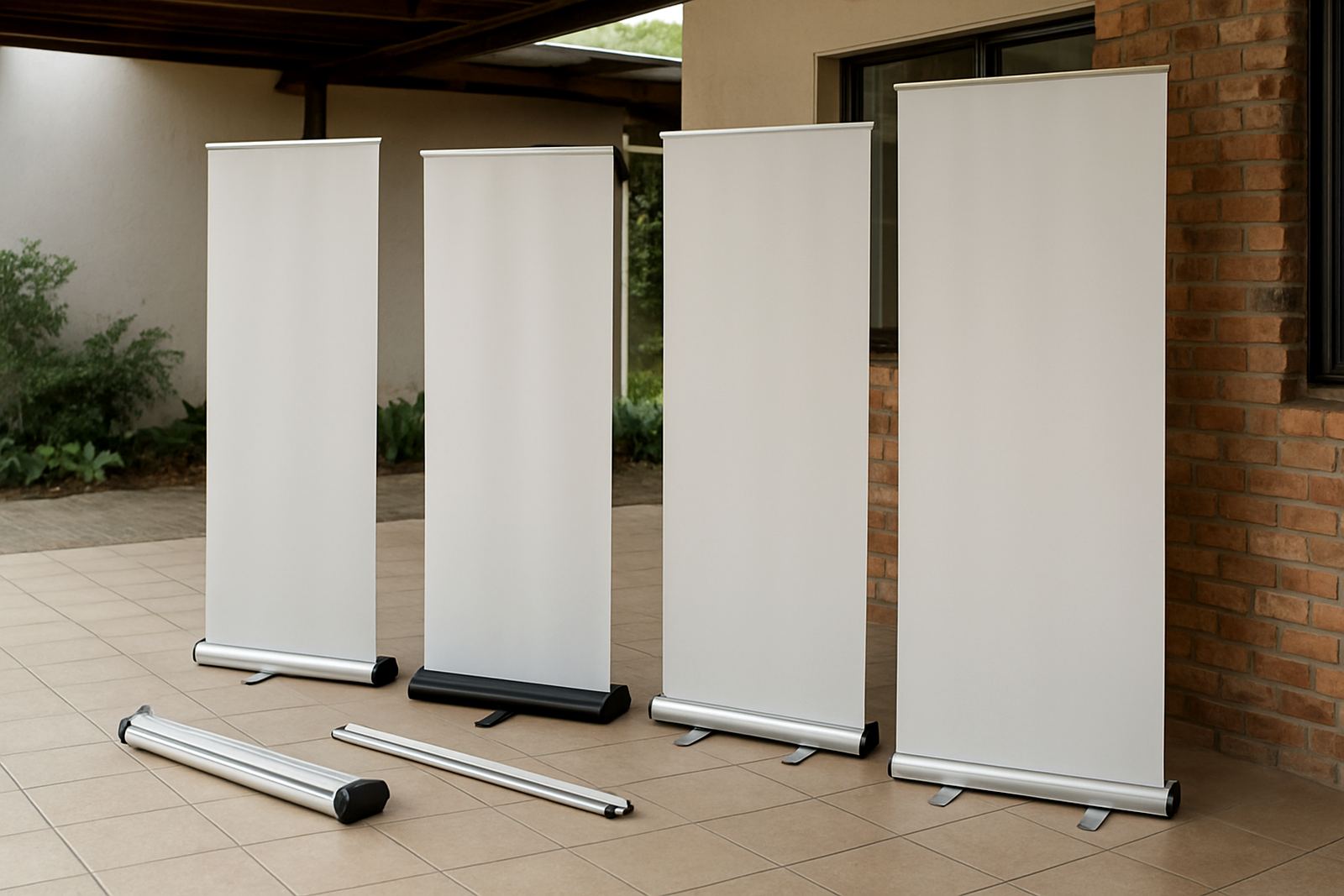
Size affects both visibility and stability. A taller banner gives more impact, but if the artwork is cramped at the top or bottom it starts to look untidy. Ask for the visible print size, not just the overall stand size. That helps if you need the banner to fit beside a counter, next to a registration table, or in a narrow passage at a venue in Westville or Phoenix.
- Ask for the exact visible print area
- Keep text brief and readable from 2 to 5 metres away
- Use large fonts for event titles, dates and stand numbers
- Leave safe space at the bottom so important text is not lost in the cassette
Check the base, pole and cassette before you pay
The parts you do not see every day are the ones that often decide whether a banner lasts. A good stand should have a base that sits level, a pole that holds the banner upright and a cassette that retracts smoothly without snagging. If the mechanism feels loose, the banner can tilt, crease or stop rolling back properly after a few uses.
Ask what material the cassette is made from and how stable it feels on a smooth tiled floor. In Durban receptions, polished concrete and tiles are common, so the base should not slide easily. If the banner will be used at multiple sites, from Briardene to Pinetown, make sure the carry case protects the edges and corners in transit.
- Confirm the stand is suitable for repeated setup and takedown
- Ask whether replacement parts are available if the mechanism wears
- Check the carry bag and whether it protects the full unit
- Make sure the base is stable on smooth indoor floors
Get the artwork right first time
Artwork setup is where many banner problems begin. Small text, poor image quality and too many colours can make even a good stand look unprofessional. Use high-resolution images and keep the layout simple. If you are including opening hours, branch names or a list of services, check every word carefully before print. A single spelling mistake is hard to ignore on a banner standing in a foyer or at a reception counter area.
For local businesses, it helps to include practical details such as branch area, event date or a clear call to action. If the banner is for a school fair, medical reception or contractor stand, choose wording that suits the audience. A banner for a trade counter in Durban North should read differently from one used at a shopping centre activation in Umhlanga or a site visit in Verulam.
- Supply logo files in a clean format if possible
- Use high-resolution photos and avoid blurry screenshots
- Keep the copy short, with one main message
- Check spelling, contact details and branch names before approving print
Think about lighting, load-shedding and venue conditions
Many reception areas and event venues in eThekwini rely on mixed lighting. A banner that looks fine on screen can appear dull under warm indoor lights or too shiny near a window. Matte or well-finished print helps reduce glare. If the banner will stand near glass or under strong light, ask how it will read from the entrance and from the side.
Load-shedding also affects events and receptions in practical ways. If the venue goes dark, your banner still needs to be readable under backup lighting or torch light at a table. That means stronger contrast, fewer words and no thin pale text on a light background. At coastal venues, moisture and wind at an open doorway can also affect how long a banner stays neat, especially if people keep touching it.
- Test the artwork for readability in low light
- Avoid glossy finishes if the banner sits under strong downlights
- Keep important details away from the bottom edge where scuffing happens
- Use strong contrast so the banner still works during power interruptions
Plan storage, transport and reuse from day one
A pull-up banner should be easy to pack away without damage. If it will be used for roadshows across the North Coast, or moved between offices in Durban North and Pinetown, the stand needs proper handling. The print should roll up straight, not crease. A banner that is stored with dust, pressure or dampness in the carry bag will usually show wear sooner than expected.
If you want to reuse the banner often, ask for a design that will still make sense after six months. Dates and temporary offers age quickly. It is usually better to keep the core message evergreen and change only the supporting details when needed. For regular events, a second banner can also help, especially if one stand is in use while another is being serviced or transported.
- Store the banner dry, upright or flat in its carry case
- Do not leave the print under heavy items in a vehicle
- Wipe dust off the base and cassette before packing away
- Consider a reusable layout if the banner will be used many times
Final checklist before you place the order
Before you approve the banner, do a last check on the practical points. Make sure the size suits the space, the wording is short enough to read quickly and the stand can be carried and set up by the people who will use it. If you need installation at a shopfront or event site, confirm the timing with enough room for setup and a quick test before doors open.
BP Signs works from Briardene, Durban North and supports businesses across eThekwini, Umhlanga, Pinetown and the KZN North Coast with banner stands, print setup and installation support. A good pull-up banner should make your reception or event easier to manage, not more complicated.
- Size confirmed for the available floor space
- Artwork checked and approved at full size
- Base, cassette and carry bag suitable for repeated use
- Print readable in normal light and during load-shedding
- Storage and transport plan in place after the event