Start with the local conditions, not just the dirt
In Durban, window film takes a beating from sea air, fine dust, rain splash and strong sunlight. On shopfronts in Briardene, Umhlanga and along the North Coast, that means the film is not only getting dirty, it is also being asked to hold up against heat and humidity every day.
The biggest mistake is treating film like plain glass. Frosting, contra-vision and printed graphics all have a surface layer that can scratch if the wrong cloth or cleaner is used. If a site sits near a busy road or a loading bay, grime builds up faster and cleaning becomes less forgiving.
- Wipe off loose dust before any wet cleaning
- Check whether the film is on the inside or outside of the glass
- Clean sooner after rain if salt marks are visible
- Do not wait until the surface is heavily caked with dirt
Use gentle cleaning methods that will not lift edges
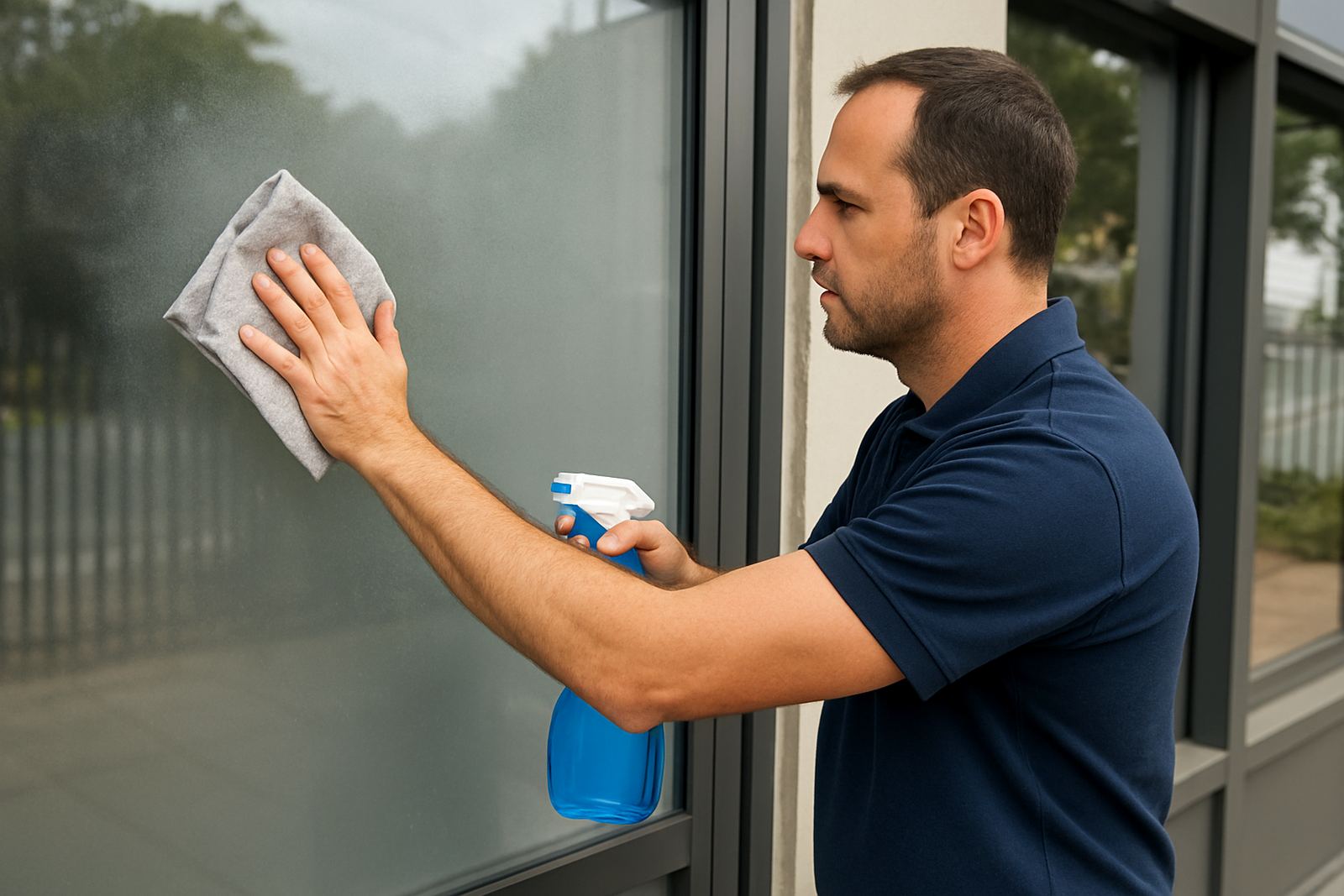
The safest approach is a soft microfibre cloth, clean water and a mild, non-abrasive cleaning solution. Spray the cloth rather than the film where possible, then wipe in straight passes. This reduces the chance of forcing liquid into edges or seams.
Avoid scraping at bird droppings, stickers or adhesive marks with hard blades. On older installations, the edges of the film can already be under a bit of stress, so aggressive cleaning can cause lifting. If you must remove a stubborn mark, soften it first and work slowly.
- Use lukewarm water, not hot water
- Keep pressure light around corners and joins
- Dry with a clean cloth so streaks do not settle
- Test any new cleaning product on a small area first
What to avoid on frosting and printed graphics
Some products look harmless but can damage film quickly. Strong solvents, abrasive cream cleaners and rough scourers can dull the finish or remove print. This is especially important for printed graphics with fine detail or for frosted glass film that needs to keep a consistent matte appearance.
In practice, the wrong cleaner can leave a patchy look that is hard to fix later. Once the surface is marked or the print starts to fade unevenly, replacement is often the only proper answer, and that costs more than basic care would have.
- Do not use steel wool or scouring pads
- Avoid thinners, acetone and heavy solvent cleaners
- Do not power wash film at close range
- Never use blades on printed ink or decorative frosting
Cleaning schedules that suit Durban shopfronts
There is no single rule for every site, but most Durban businesses do better with a light weekly clean and a deeper wipe every two to four weeks. Coastal sites and premises close to traffic may need more frequent attention. A window facing the afternoon sun will also show streaks more easily, so regular care keeps it looking neat.
For retail fronts, offices and service counters, the aim is not only appearance. Clean film lets more light through where needed, and it keeps privacy finishes looking even instead of blotchy. It also helps staff spot early issues like lifting corners, scratches or bubbling before they spread.
- Weekly dusting for busy entrances and street-facing glass
- Fortnightly wet cleaning for most office and retail sites
- Monthly inspection for edges, joins and fading
- Extra checks after storms or maintenance work nearby
A simple care routine for the people on site
Most film damage happens during everyday maintenance, not during major cleaning. That is why it helps to give cleaners, reception staff or site managers a basic routine. When everyone knows what is safe, the film lasts longer and the finish stays consistent across the building.
A good routine should be simple enough to follow without special training. If a site has different types of film, such as frosting on one door and printed branding on another, label them and treat them as separate finishes. This cuts down on mistakes and keeps the maintenance work tidy.
- Keep one approved cloth and cleaner for film surfaces
- Mark which panes have printed graphics or privacy film
- Report peeling, scratches or bubbling early
- Schedule maintenance visits before damage gets worse
When cleaning is no longer enough
Some marks can be cleaned off, but some problems mean the film has reached the end of its useful life. If the print is fading unevenly, the frosting has gone cloudy, or the corners are lifting after years in the sun, it may be time for refurbishment rather than another wash. This is common on exposed shopfronts and vehicle-facing glass where the film takes constant wear.
On one Durban North retail site, a window graphic near the entrance started showing salt streaks and edge lift after repeated cleaning with the wrong product. The issue was not solved by more scrubbing, it needed removal, fresh surface prep and a new install. That saved the glass from further damage and brought the front back to a clean, professional finish.
Good cleaning habits do not just make window film look better today. They protect the material, reduce replacement costs and keep your branding clear for longer, which matters in a city where sun and humidity work on everything.