Start With the Fascia, Not the Artwork
A fascia sign should be sized to the building line first, then the logo and wording can be fitted into that space. On a narrow frontage, a sign that is too tall can look cramped and may clash with the canopy, roller shutter or window line. On a wider shopfront, a sign that is too small gets lost and the shop looks half finished.
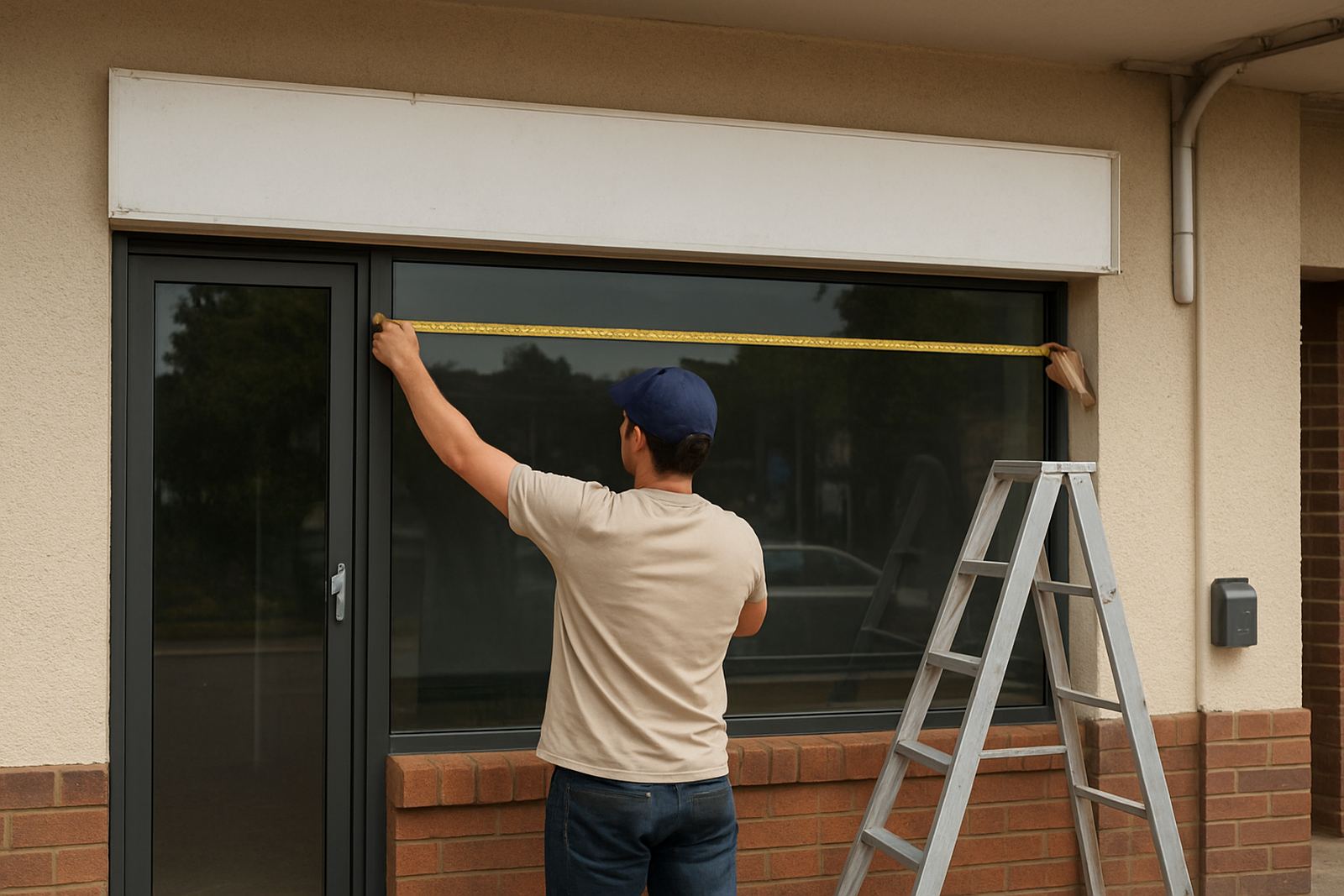
The first measurement we take is the clear fascia area between any columns, cladding joints, lights, pipes and security fittings. We also check the height available above the entrance and below the roof or parapet. In Durban North and Umhlanga, many centres have strict frontage proportions, so the usable space may be less than you think. A proper site survey avoids cutting artwork down later and saves costly rework.
- Measure the full fascia width in metres, then note any obstructions
- Check the clear height from bottom trim to top capping
- Allow space for fixings, wiring and maintenance access
- Keep the sign readable from the parking area or road, not just from the pavement
A Simple Rule for Width and Readability
As a practical guide, the main sign panel often works best when it uses about 70% to 90% of the available fascia width. That leaves enough margin at each end so the sign does not feel forced into the frame. If the building frontage is 8 metres wide, for example, a sign around 6.2 to 7.2 metres wide is usually more balanced than one that runs edge to edge.
Letter height matters just as much. Drivers moving past a roadside shop in Pinetown or Phoenix need enough time to read the name without slowing down. A small sign might still suit a pedestrian street, but a fascia facing a busy access road may need larger lettering or a stronger contrast. We often recommend checking the view from the furthest practical point in the parking area, then sizing the text for that distance.
- For close viewing, smaller text can work if the frontage is tight
- For road-facing fascias, larger letters and cleaner layouts help
- Keep the main brand name dominant and secondary information smaller
- Avoid filling every centimetre with text, icons and taglines
How Building Width Changes the Sign Format
Narrow fascias usually suit simpler formats like one clear panel, individual lettering, or a compact light box. Wide fascias can handle split sections, longer straplines, or multiple sign faces if the building is shared by more than one tenant. The key is to match the sign type to the building width instead of forcing one standard size on every shop.
For smaller units under 4 metres wide, a clean panel or cut vinyl finish often gives the best result. Between 4 and 8 metres, there is more room for layered panels, dimensional lettering, or a light box with side margins. Above 8 metres, proportion becomes more important because large blank areas can make the frontage feel flat. A well sized sign fills the space without crowding the windows or making the entrance look low.
In coastal areas like Ballito and Tongaat, wider fascias also need materials that cope with salt air and strong sun. If a sign is too large but lightly fixed, wind uplift becomes a problem over time. We allow for this during fabrication and installation so the sign stays straight and secure.
Choosing the Right Height for the Fascia Panel
Height is where many shopfronts go wrong. A panel that is too tall can block natural light, interfere with window frosting, or sit awkwardly against a moulding line. A panel that is too short may leave the building looking unfinished. The right height depends on the visual weight of the building and how much information must fit on the face.
Most fascia signs work best when the panel height is kept neat and consistent with the shopfront lines. If there is a bulkhead or a recessed section, use that structure as a guide. If the area below the sign is active, such as a busy entrance or display window, keeping the height controlled gives a cleaner result and makes maintenance easier. Load-shedding also matters here if the sign includes illumination, because a well-proportioned light box can be more effective than a large unlit face that disappears after dark.
- Use the fascia height to match the building lines, not just the artwork
- Allow room for illumination, wiring and service access
- Check that the sign does not interfere with blinds, shutters or awnings
- For multi-tenant centres, keep all tenant fascias in one visual standard
Local Example: A 6 Metre Shopfront in Briardene
Take a 6 metre wide shopfront in Briardene, Durban North. The owner wants clear branding visible from the road, but the site has a roller shutter, a security gate and a narrow sign band above the entry. In that case, a fascia around 4.8 to 5.4 metres wide may be the practical sweet spot, with enough side breathing room for a balanced look.
If the frontage is only 500 to 700 mm high, a long thin panel with strong lettering may work better than a heavy box sign. If the landlord allows a light box, that same size can be used to improve night visibility without overloading the elevation. We also check for municipal or centre rules on projection, brightness and fixings, because some sites need approval before any new sign can go up. A quick survey at the start avoids delays later, and it keeps the installation tidy.
On a coastal site with afternoon sun and humidity, the finish also needs proper lamination and weather aware fixing. That means the sign still looks good after months of heat, rain and sea air, not just on the day it goes up.
What to Tell Your Sign Maker Before Fabrication
The more accurate the brief, the better the fascia size will be. A good sign project starts with measurements, a clear photo of the building, and a note on where people approach from. If the sign is for a storefront in Westville or Umhlanga, tell us whether it is mainly for passing traffic, foot traffic or customers parking directly in front. That changes the sizing approach.
Useful details to give before artwork is set include:
- The exact fascia width and height in metres
- Any columns, lights, cables, signs or fire equipment nearby
- Whether the fascia is for vinyl, Perspex, ABS or a light box
- Whether the sign needs to be seen by day only or day and night
- Any centre or municipal rules already provided by the landlord
Once those details are confirmed, the artwork can be sized properly and prepared for fabrication. That cuts down on resizing later, which is where many projects lose time and money.
},{